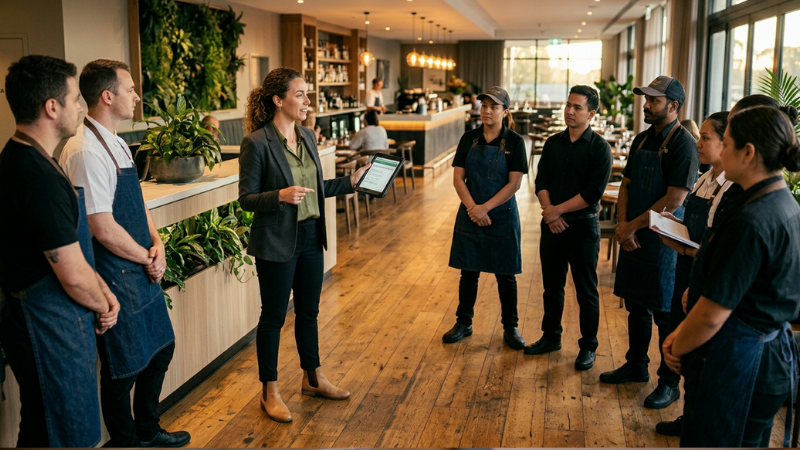
In hospitality, culture is shaped on the floor — not in policy documents. Leaders influence how teams behave, what is accepted, what gets addressed, and what gets ignored. This is especially true when it comes to sexual harassment.
In many venues, issues don't start with formal complaints. They develop through everyday behaviour that goes unchecked.
Why leadership matters
Sexual harassment in hospitality often happens in informal settings, builds gradually over time, and can become normalised during busy shifts — which means it frequently goes unreported.
Prevention depends heavily on what leaders notice, how they respond, and what they reinforce. Leadership behaviour sets the standard for the entire team.
From response to prevention
Traditionally, organisations have focused on responding to complaints and managing incidents after they occur. But expectations have changed.
Under Australian regulations, businesses are now expected to take proactive steps to prevent harassment — not just respond to it. This means identifying risks, addressing behaviours early, and creating environments where people feel safe to raise concerns. It aligns with the positive duty under Respect@Work, which requires employers to take reasonable and proportionate measures to eliminate workplace sexual harassment.
Where risk shows up in hospitality
Sexual harassment risks are often higher in late-night environments, venues serving alcohol, fast-paced high-pressure shifts, and teams with unclear boundaries. New and less experienced staff are particularly vulnerable — they may be less confident raising concerns, unsure where boundaries sit, or hesitant to challenge behaviour that doesn't feel right.
In hospitality, where teams regularly include new workforce entrants and casual staff, this matters. Without clear leadership and expectations, inappropriate behaviour can become accepted simply because no one challenges it.
What effective leadership looks like in practice
Prevention isn't about one action — it's about consistent behaviour over time.
Recognising early warning signs. Leaders need to identify behaviour that crosses the line, notice patterns rather than isolated incidents, and respond before issues escalate.
Setting clear expectations. Teams need to understand what behaviour is acceptable, what isn't, and what happens when standards aren't met.
Responding appropriately. When concerns are raised, leaders need to take them seriously, act consistently, and follow clear processes — without minimising what's been raised.
Managing higher-risk environments. Late-night shifts, high-pressure service periods, and complex team dynamics all require active management, not just awareness.
Reinforcing culture. Culture is built through what leaders tolerate — and what they challenge. Teams take their cues from the people above them.
Why issues are often missed
Even experienced leaders can fall into patterns that undermine prevention — focusing on operations over behaviour, overlooking early warning signs, delaying difficult conversations, or feeling uncertain about how to respond. In a busy hospitality environment, this is understandable. But without support and training, prevention becomes inconsistent.
The role of training
Preventing sexual harassment requires more than awareness. Leaders need practical skills to recognise risk early, respond confidently, manage difficult situations, and apply consistent standards across their team.
Effective training reflects real hospitality situations, is designed for supervisors and senior staff, focuses on decision-making rather than theory, and is reinforced over time — not delivered once and forgotten.
Bringing it together
Sexual harassment prevention in hospitality depends on leadership. Not just policies. Not just reporting processes. But what leaders notice, act on, and reinforce every shift.
If leaders aren't equipped to recognise and respond to early warning signs, risks go unnoticed until they escalate.
Allara Global's Effective Leadership in Preventing Sexual Harassment course gives senior leaders the practical skills to recognise early warning signs, manage higher-risk environments, and build a culture of accountability — through realistic hospitality scenarios designed for real-world decision-making.