

Course
Help your team understand Australia's seafood country of origin labelling requirements. This course explains when seafood dishes need a country of origin label, how to apply the correct label, and how to keep menus and records compliant with Australian Consumer Law.

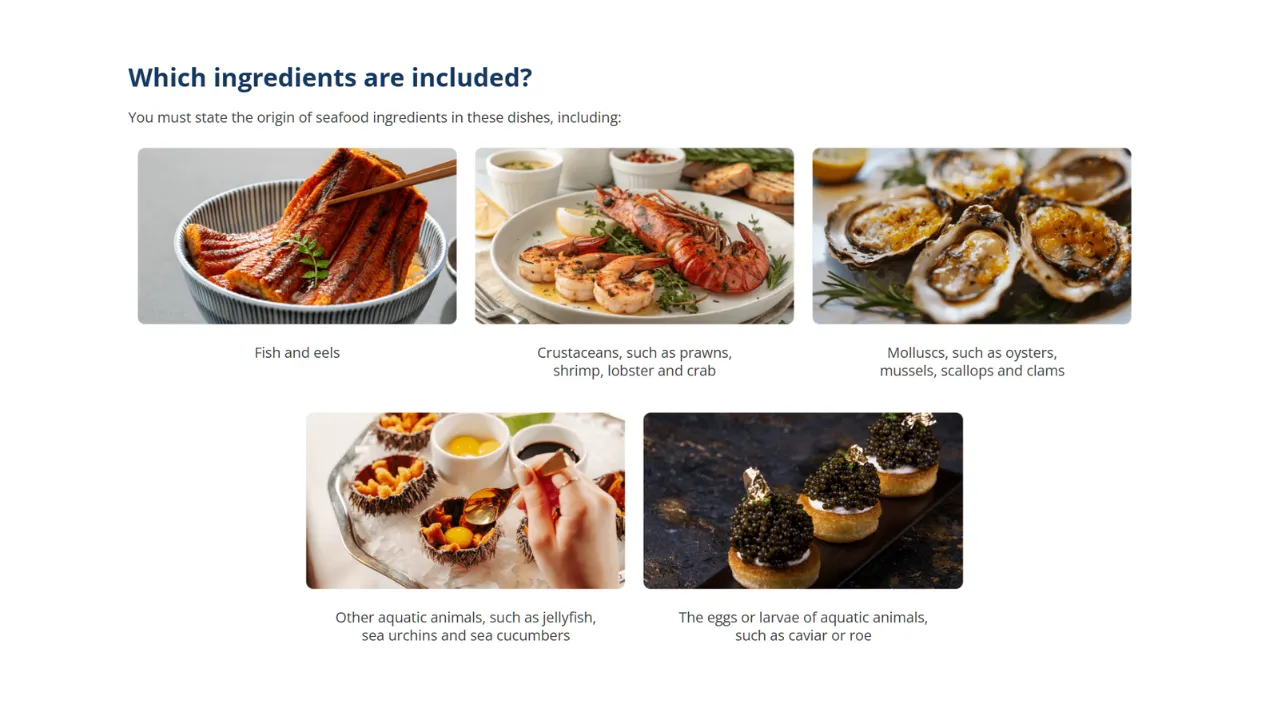
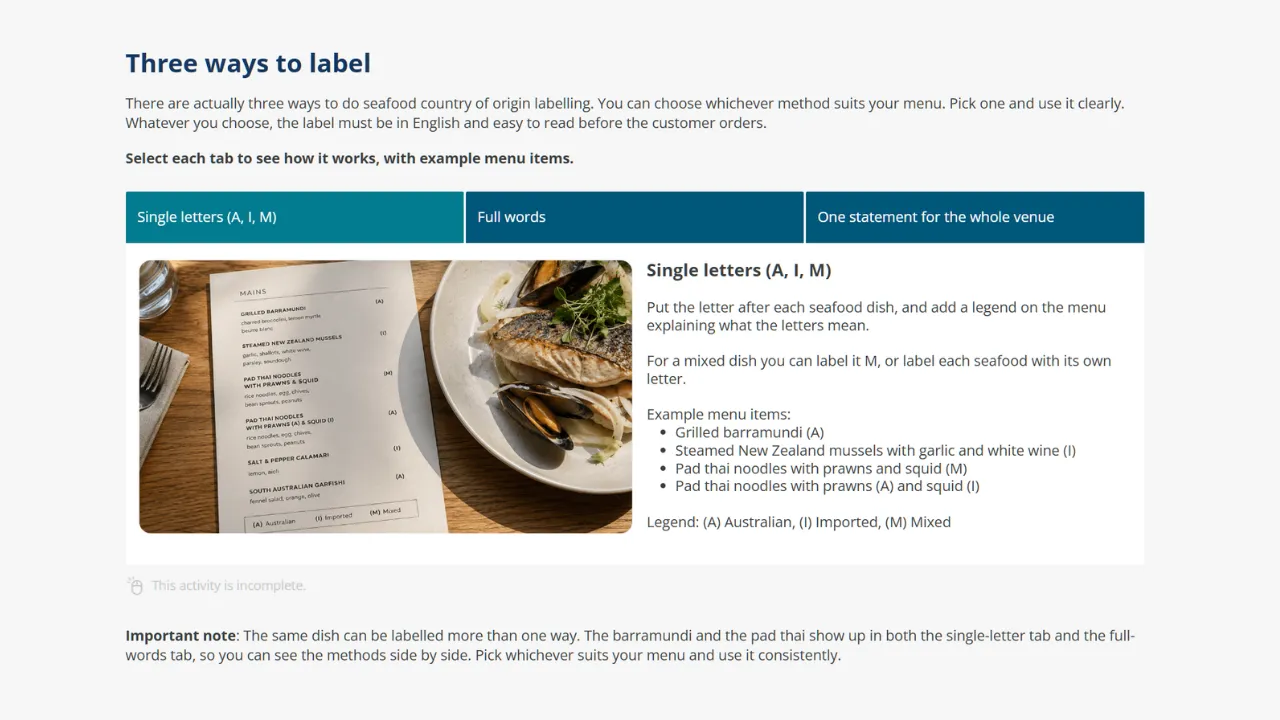

From 1 July 2026, many hospitality businesses that sell ready-to-eat seafood must tell customers where their seafood comes from. This course gives hospitality teams the practical knowledge to identify which dishes require labelling, apply the correct Australian (A), Imported (I) or Mixed (M) label, and keep labels accurate as suppliers or menu items change.
Available in English
Seafood country of origin labelling requirements are part of the Australian Consumer Law. Businesses that provide incorrect or misleading country of origin information may breach consumer protection laws. This course helps hospitality businesses understand their obligations, apply the rules correctly and reduce the risk of non-compliance.