NSW FOGO Food Waste Sustainability Mandate
Prepare your hospitality team for the new NSW food waste separation requirements. This online course explains which venues must comply, key deadlines and how to introduce practical food waste separation systems in the workplace.


Course overview
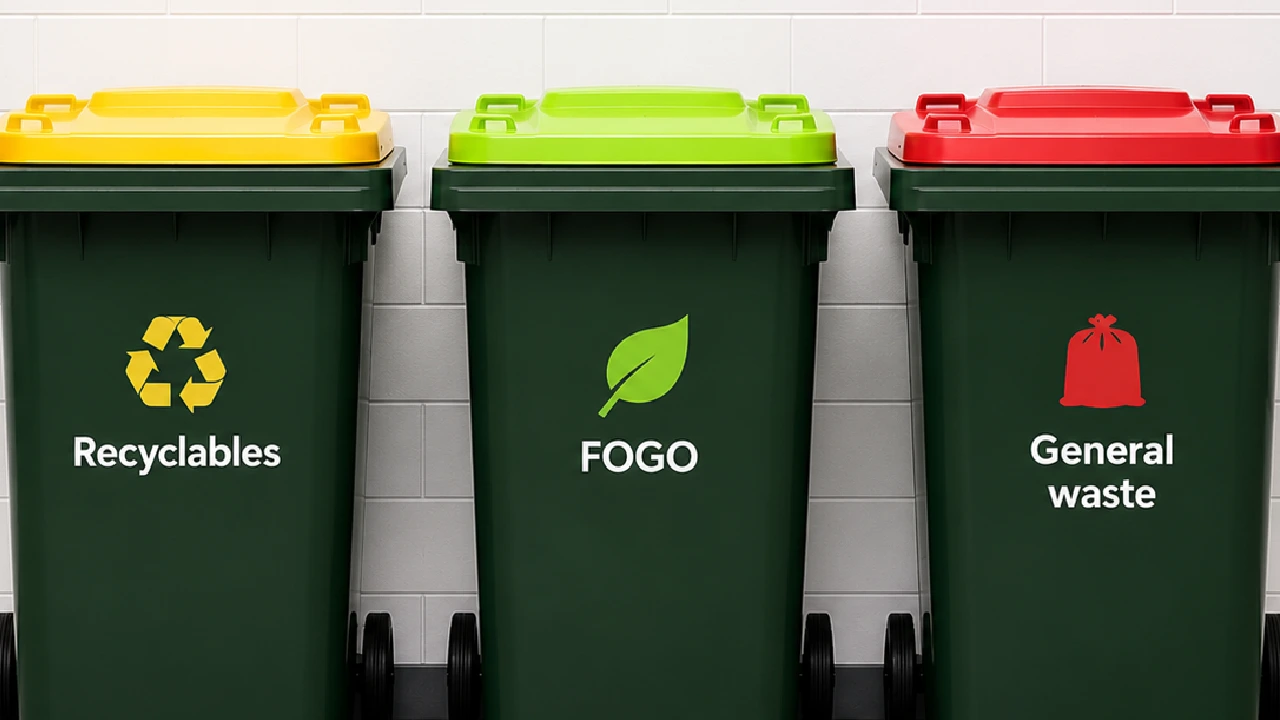
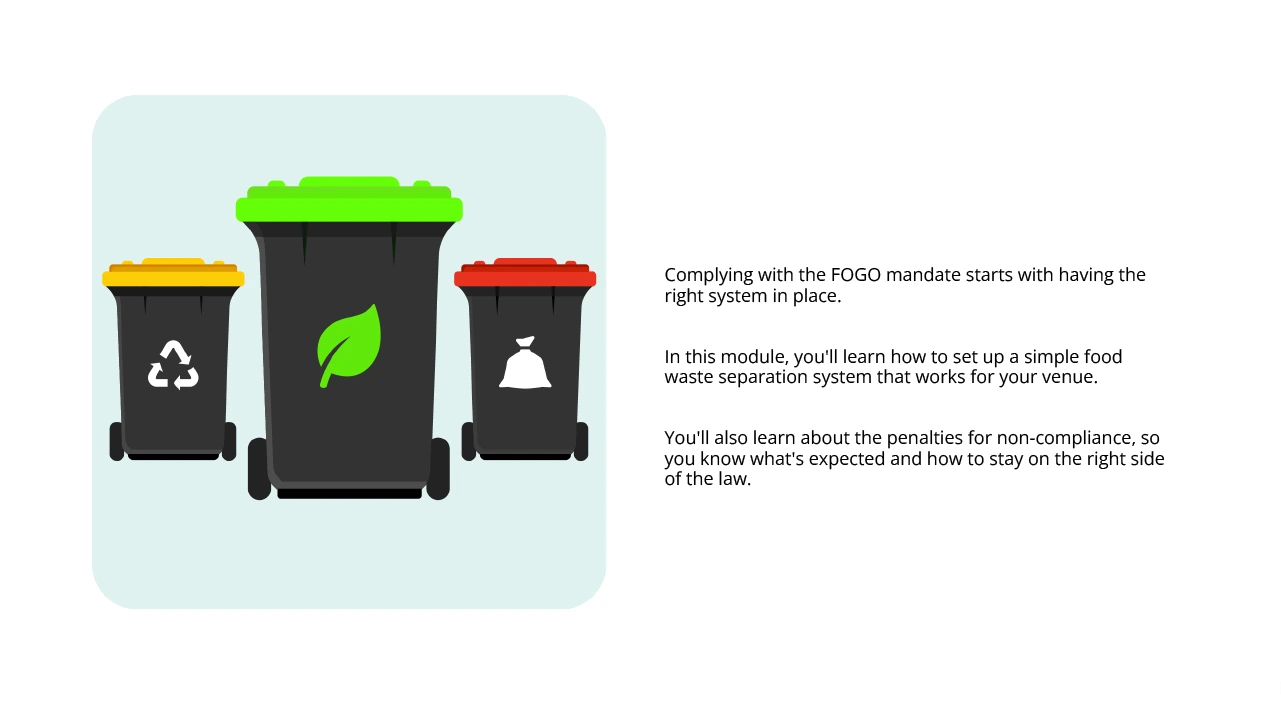
Designed for NSW restaurants, cafés, hotels and other hospitality venues, this course explains the Food Organics (FOGO) mandate and its impact on daily operations. Across four short modules, learners explore compliance timeframes based on general waste capacity, correct food waste sorting, bin placement, signage and practical steps for implementing a food waste separation system.
Languages
Available in English
Why choose this course?
Understand the NSW FOGO requirements and which hospitality businesses must comply.
Identify compliance deadlines based on your venue's general waste capacity.
Explain the environmental and business benefits of separating food waste.
Distinguish what can and cannot go into a Food Organics (FO) bin.
Set up practical food waste separation systems, including bin placement and signage.
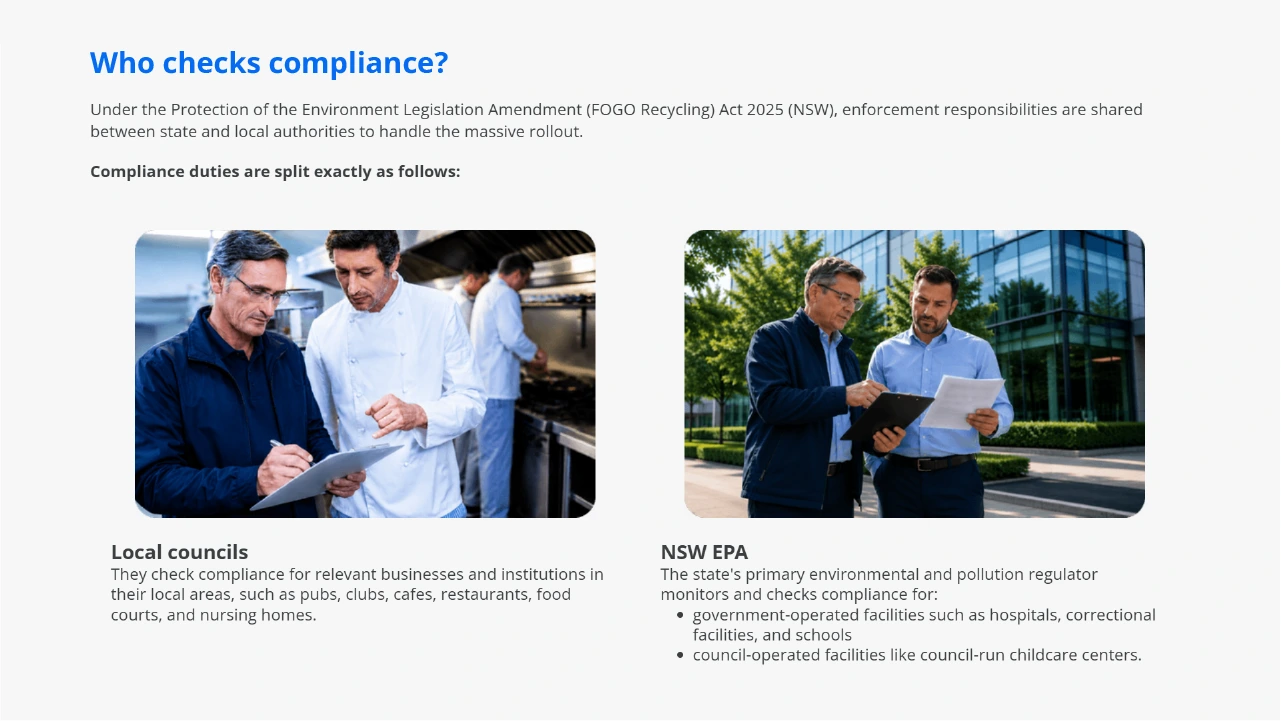
Recognise the consequences of non-compliance and how requirements are monitored.
Legal context
NSW's mandatory food waste separation requirements are being introduced in stages, with larger hospitality businesses required to comply from 1 July 2026. The requirements extend to businesses generating 1,980 litres or more of general waste per week from 1 July 2028, and smaller businesses meeting the relevant thresholds from 1 July 2030.
Affected venues must separate food waste from general waste for collection. Failure to comply may result in regulatory action and financial penalties. This course helps hospitality teams understand their obligations, identify the deadlines that apply to their venue and establish practical food waste separation processes.
Who is this course for?
Prepare for new requirements: Help managers and staff understand the NSW food waste mandate and what it means for their venue.
Improve waste separation: Give teams practical guidance on sorting food waste correctly and reducing contamination.
Support more sustainable operations: Establish consistent waste management practices that can help reduce waste disposal costs and environmental impact.